Dermatologically Tested Upcycled Coffee Oil
News
Robert Burton
05 October 2026
Incorporating our dermatologically tested upcycled coffee oil ensures sustainable sourcing without sacrificing clinical efficacy or dermal safety.
Skincare brand owners and cosmetic chemists require raw materials that satisfy circular supply chain demands. These ingredients must also pass rigorous toxicology and compatibility screenings.
At Revive Eco, we practice radical reincarnation by transforming spent coffee grounds into high-value bioactive lipid ingredients. To prove circular innovation matches traditional virgin botanical oils, we submitted our flagship ingredient to comprehensive human patch testing.
Clinical results confirm our coffee oil achieved the highest skin tolerability rating on sensitive skin panels. This delivers an uncompromised solution for high-performance topical formulations.
Key Takeaways
Flawless Clinical Safety:
Revive Eco upcycled coffee oil achieved a Grade 0 score across 100% of human participants. In an independent clinical patch test, demonstrating zero erythema, edema, or allergic sensitisation.
Tested on Sensitive Skin:
Unlike basic screening panels, this study evaluated thirty male and female participants. All with medically confirmed sensitive skin under 24-hour continuous occlusive conditions.
Accredited Independent Validation:
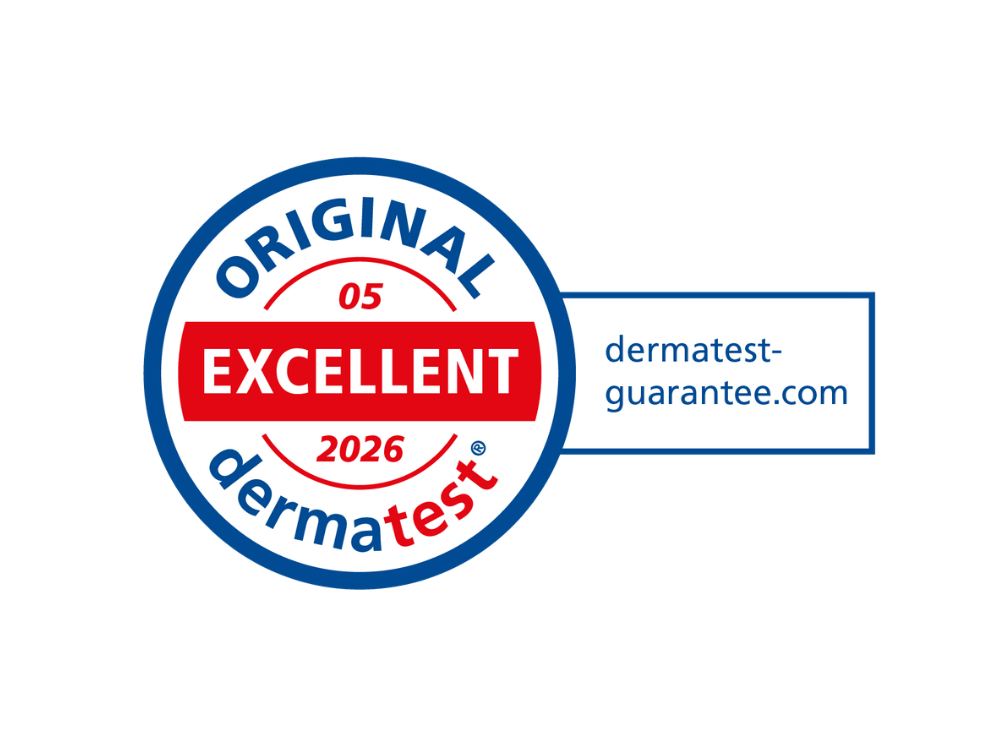
Testing was conducted by Dermatest GmbH in Münster, Germany. In compliance with international standard DIN EN ISO 10993-23:2021, earning the official Dermatest “Excellent” seal.
Versatile Formulation Stability:
Evaluated at 100% purity with zero irritation. Formulators can incorporate this lipid into facial oils, barrier creams, and moisturisers at flexible inclusion rates without dermal tolerance concerns.
The Need for Validated Safety in Circular Beauty
The cosmetics industry is undergoing an overdue shift toward closed-loop sourcing. However, cosmetic chemists frequently encounter technical hesitation when reviewing upcycled raw materials. Common concerns centre on chemical consistency, residual processing contaminants, or unpredictable dermal responses. Sustainable storytelling alone is never enough to secure a spot in a commercial formulation. Technical dossiers must provide undeniable clinical proof.
At Revive Eco, we challenge the conventional waste industry. We view coffee grounds not as discarded material, but as a dense reservoir of unexploited natural chemistry.
To dismantle the skepticism around circular ingredients, we committed to full clinical validation. Formulating with a dermatologically tested upcycled coffee oil gives cosmetic scientists complete confidence that circular credentials and premium physiological tolerance can coexist seamlessly.
Epicutaneous Patch Testing: The Clinical Methodology
To evaluate primary skin irritation and allergenic potential under strict clinical parameters, Revive Eco commissioned Dermatest GmbH, an internationally accredited dermatological research institute based in Münster, Germany.
The investigation (Study Number ST-ET-2026-00085) followed rigorous international cosmetic and medical device assessment protocols. Specifically DIN EN ISO 10993-23:2021 for the biological evaluation of medical devices and cosmetics. The trial also adhered to testing guidelines established by the German Society of Dermatology (DDG), the German Society of Allergology and Clinical Immunology (DGAKI), and Cosmetics Europe (formerly Colipa).
Rather than testing on a general cohort, the research protocol deliberately selected thirty individuals with clinically diagnosed sensitive skin. Evaluating ingredients on barrier-compromised skin provides the ultimate benchmark for dermal compatibility. Ensuring that even mild sub-clinical irritation or contact allergies are detected.
The methodology applied 20 microlitres of undiluted, 100% pure Revive Eco upcycled coffee oil directly onto the intact skin of each subject’s back using allergEAZE clear film occlusive chambers. The patches remained fixed for 24 continuous hours. This occlusive environment encourages deep penetration into the stratum corneum, creating the most demanding conditions possible for identifying cutaneous intolerance.
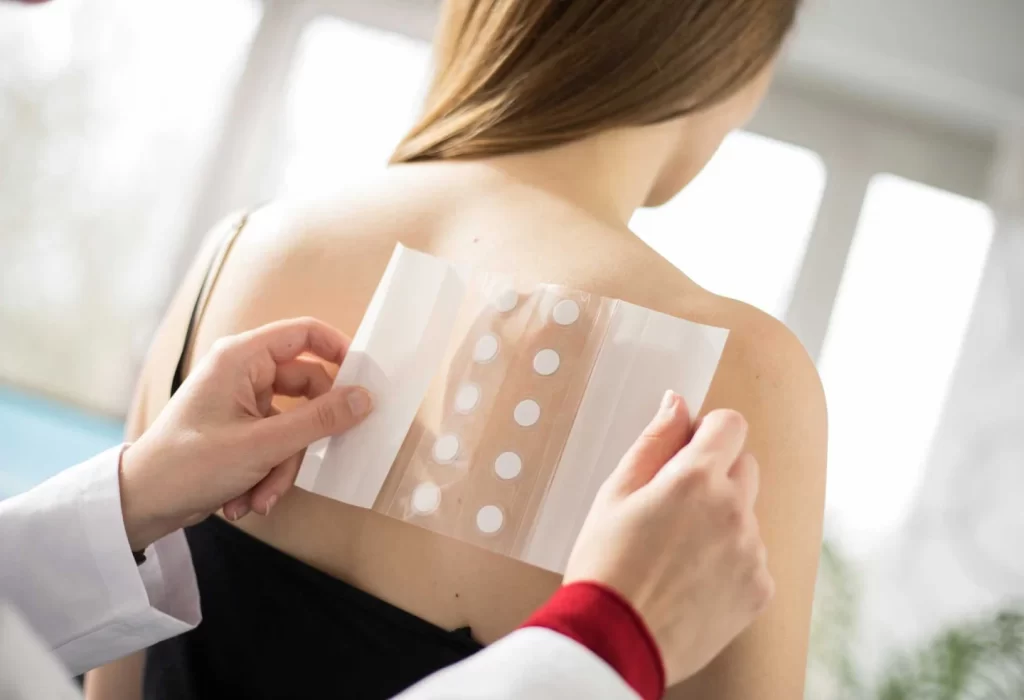
Clinical Findings: Complete Tolerability Across All Timepoints
Specialist dermatologists conducted visual clinical inspections at three specific intervals following initial application. Immediately after patch removal at 24 hours, at 48 hours, and at 72 hours. Dermal reactions were classified according to the ISO 10993-23:2021 grading criteria:
- Grade 0: No visible reaction (negative)
- Grade 1: Weakly positive reaction (mild macular erythema or dry appearance)
- Grade 2: Moderately positive reaction (distinct erythema extending across the site)
- Grade 3: Strongly positive reaction (severe erythema, edema, or vesicular formation)
The results across the thirty-subject sensitive skin cohort were unambiguous. Not a single participant showed any sign of erythema, swelling, dryness, or papular irritation at the 24-hour, 48-hour, or 72-hour observation marks. Every volunteer received a definitive Grade 0 reading at every assessment stage.
Based on these clinical findings, Dermatest GmbH certified that Revive Eco coffee oil produces no primary skin irritation and carries no risk of allergic sensitisation. The ingredient received the official clinical assessment rating of “excellently” tolerated and was awarded the original Dermatest guaranty seal. This independent data confirms our dermatologically tested upcycled coffee oil provides skin compatibility equal to, or exceeding, conventional cosmetic oils.
Based on these clinical findings, Dermatest GmbH certified that Revive Eco coffee oil produces no primary skin irritation and carries no risk of allergic sensitisation. The ingredient received the official clinical assessment rating of “excellently” tolerated and was awarded the original Dermatest guaranty seal. This independent data confirms our dermatologically tested upcycled coffee oil provides skin compatibility equal to, or exceeding, conventional cosmetic oils.
Formulation Chemistry and Sensitive Skin Value
For R&D formulation teams, this clinical certification opens immediate possibilities for functional product development, particularly within sensitive skin and barrier repair categories.
Because the oil underwent testing at 100% concentration under complete occlusion with zero adverse reactions, formulators are not restricted by narrow inclusion caps. The oil performs reliably as an active conditioning agent at 1% to 5% in daily moisturisers, or as a primary lipid carrier at 10% to 50% in restorative facial serums and oils.
Commercial Advantages for Skincare Brands
Bringing our dermatologically tested upcycled coffee oil into commercial product lines provides three clear commercial advantages:
1. Substantiated Clean Label Claims:
Brand partners can make verified on-pack claims, including “dermatologically tested,” and “clinically verified non-irritating.” These claims establish immediate credibility with conscious consumers who demand clean, evidence-based formulas.
2. De-risking Circular Raw Material Sourcing:
Regulatory documentation is a major hurdle when introducing upcycled ingredients. Revive Eco supplies comprehensive testing documentation and safety data sheets that accelerate toxicological sign-offs and international product registrations.
3. True Environmental Differentiation:
Consumers are fatigued by surface-level greenwashing. Using our upcycled lipid allows brands to communicate measurable carbon savings and landfill diversion while maintaining luxury textures and clinical efficacy.
Radical Reincarnation: Rebuilding the Beauty Supply Chain
A simple principle established Revive Eco: we do not believe in landfill. By rethinking discarded organic materials, we uncover high-performing natural alternatives to virgin petrochemical and agricultural feedstocks.
Every batch of coffee oil we produce diverts valuable organic material from decomposition, capturing natural bioactives and giving them purposeful second lives. Our clinical results prove that sustainable raw materials can compete at the highest tier of cosmetic science.
When you formulate with our dermatologically tested upcycled coffee oil, you are choosing a circular ingredient that protects both delicate skin barriers and the natural systems we all depend on.
Frequently Asked Questions
What does the Dermatest “Excellent” seal mean for cosmetic formulations?
The Dermatest “Excellent” seal confirms that the ingredient underwent standardized clinical epicutaneous patch testing on human volunteers without causing any toxic-irritative or allergic reactions. It assures formulators that the raw material is biologically safe, non-sensitising, and suitable for topical cosmetic applications.
Was the patch test conducted on standard or sensitive skin types?
The clinical study specifically evaluated thirty human subjects who had pre-diagnosed sensitive skin. Testing on sensitive skin panels provides a much higher standard of safety assurance than standard panels, demonstrating that the oil is well tolerated even by compromised or highly reactive skin barriers.
Can Revive Eco upcycled coffee oil be used in leave-on sensitive skin products?
Yes. Because the oil showed zero irritation when applied undiluted (100% purity) under continuous 24-hour occlusion, it is suitable for leave-on emulsions, barrier creams, eye treatments, and anhydrous facial oils at both low and high inclusion rates.